Uganda is known for gorilla trekking and the Big 5, and it is also one of Africa's richest wildlife destinations. From rare primates and prehistoric-looking birds to tiny forest antelopes, the national parks protect a remarkable range of species that most travellers never expect to see. In this article, unique means remarkable or interesting rather than found only in Uganda. Several of these species also live elsewhere in Africa, but they are rarely encountered on a conventional East African safari, which is what makes them worth planning around.
Stretching from the Albertine Rift forests to the Nile ecosystems of Murchison Falls National Park and the wetlands of Mabamba, Uganda packs remarkable biodiversity into a relatively compact country. You can track gorillas in Bwindi Impenetrable National Park, look for chimpanzees in Kalinzu Forest Reserve, scan papyrus swamps for the shoebill, and still enjoy classic game drives for antelope, giraffe, and tree-climbing lions. Below, you'll find 27 remarkable wildlife entries in Uganda, where to see them, how difficult they are to spot, and how to plan a safari that combines wildlife viewing with primate experiences.
Wildlife Viewing Table
Before the full list, here is a quick guide to where each species is best looked for and how realistic a sighting is. The categories are a guide only, not probabilities, and no sighting in any national park is guaranteed.
| Animal | Where to look | Sighting prospects |
|---|---|---|
| Golden Monkey | Mgahinga bamboo zone | A good safari target on organised tracking |
| De Brazza's Monkey | Semuliki riverine forest | Specialist; hard to see |
| Red-tailed Monkey | Kibale and Bwindi forest walks | A good safari target on forest walks |
| L'Hoest's Monkey | Kibale and Bwindi montane forest | Specialist; variable |
| Potto | Kibale night walks | Exceptional encounter; night activity |
| Bushbaby (several species) | Kibale night walks, Lake Mburo night drives | Specialist; variable |
| Grey-cheeked Mangabey | Kibale mid-canopy | A good safari target on forest walks |
| Shoebill | Mabamba Swamp, Murchison Falls delta | Specialist birding; variable |
| Rwenzori Turaco | Rwenzori Mountains, Bwindi montane | Specialist; variable |
| Great Blue Turaco | Kibale and Semuliki forest edges | A good safari target on forest walks |
| Grey Crowned Crane | Murchison Falls, Lake Mburo wetlands | A good safari target on suitable drives |
| Uganda Kob | Queen Elizabeth and Murchison plains | A good safari target on game drives |
| Klipspringer | Kidepo rocky outcrops | Specialist; variable |
| Blue Duiker | Bwindi forest undergrowth | Exceptional encounter; rarely seen |
| Guenther's Dik-dik | Kidepo dry bush | Specialist; variable |
| Bohor Reedbuck | Murchison Falls and Kidepo grassland | Specialist; variable |
| Rothschild's Giraffe | Murchison Falls; reintroduced to Lake Mburo and Kidepo | A good safari target on suitable drives |
| Plains Zebra | Lake Mburo, Kidepo | A good safari target on game drives |
| African Golden Cat | Western Uganda forests | Exceptional encounter; almost never seen |
| Pangolin (several species) | Selected reserves and forest edges | Exceptional encounter; almost never seen |
| Nile Crocodile | Murchison Falls, Victoria Nile | A good safari target on the boat cruise |
| Giant Forest Hog | Bwindi and Semuliki forest | Specialist; variable |
| Sitatunga | Lake Mburo, Mabamba wetlands | Specialist; variable |
| Aardvark | Kidepo, where night access is permitted | Exceptional encounter; night activity |
| Rock Hyrax | Kidepo, Mount Elgon rocky areas | A good safari target on suitable drives |
| Patas Monkey | Kidepo, Narus Valley | Specialist; variable |
| Tree-Climbing Lions of Ishasha | Queen Elizabeth, Ishasha sector | Specialist; variable, allow a full day |
Uganda's Primates Beyond the Gorillas
1. Golden Monkey
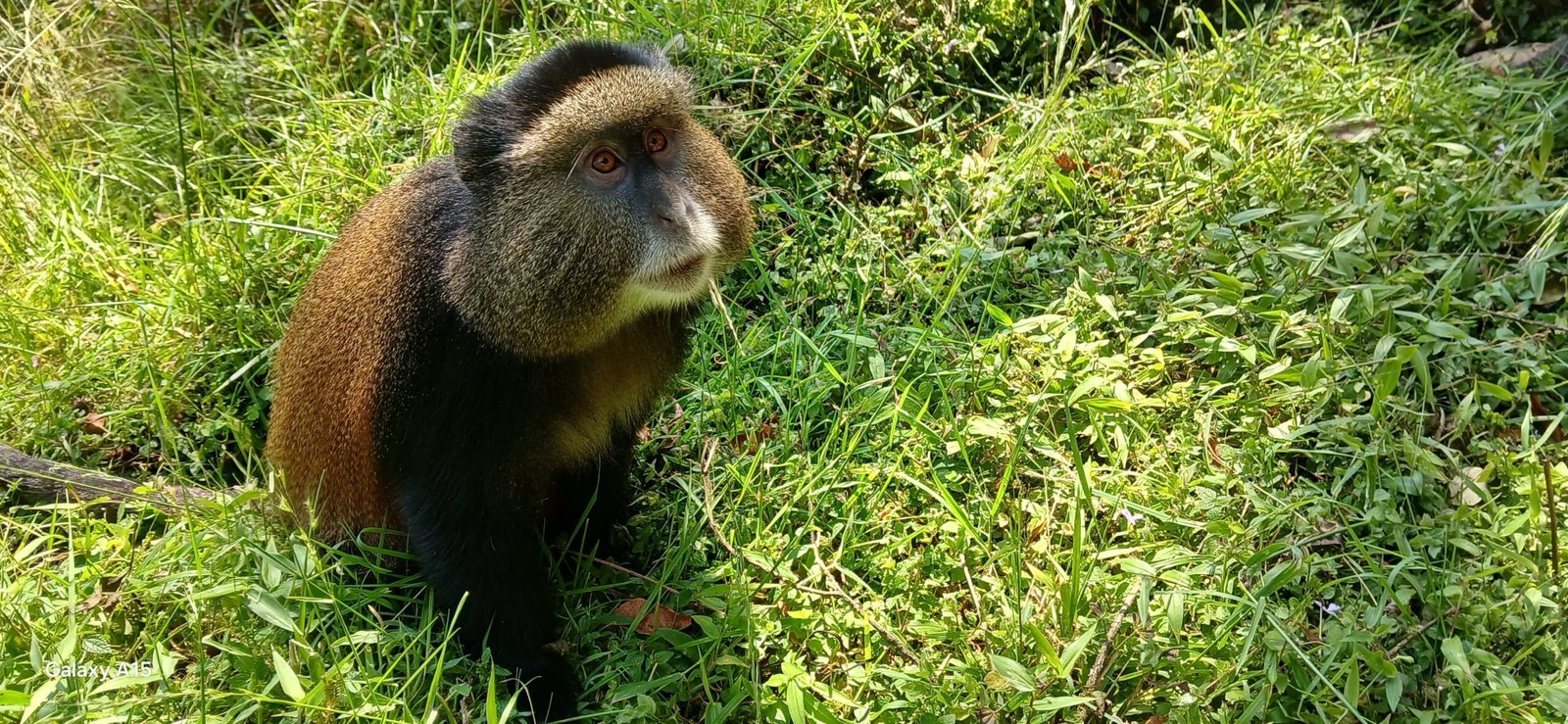
If you're interested in rare primates, this is one of Uganda's standout species. Golden monkeys live in the bamboo zone of Mgahinga Gorilla National Park, high in the Albertine Rift, and their range is limited to the Virunga volcanoes region, which spans Uganda, Rwanda and the Democratic Republic of Congo. Their golden-orange coats, quick movements, and social behaviour make them interesting to watch. They are also endangered. The Uganda Wildlife Authority regulates tracking in Mgahinga and helps protect their habitat alongside broader conservation work in the park. If you want to combine primates in one trip, this is one of the best species to pair with gorilla trekking.
2. De Brazza's Monkey
You can sometimes find De Brazza's monkeys in Semuliki National Park and parts of the Mount Elgon ecosystem, usually in riverine forest and thick vegetation. They are known for the white beard and orange crown. They're shy and often stay hidden, so a patient guide makes all the difference.
3. Red-tailed Monkey
Red-tailed monkeys are among the more commonly seen primates in Kibale National Park, Bwindi Impenetrable National Park, and even around some forest lodge areas. Look for the white nose patch and chestnut-red tail. They move fast, but they are often seen during forest walks, so you do not need specialist luck to enjoy them.
4. L'Hoest's Monkey
L'Hoest's monkeys are best seen in Kibale National Park and occasionally in Bwindi's montane forest zones. Their white chest bib and dark coat make them striking when they step into a clearing. They can be cautious, but early morning forest walks improve your odds.
5. Potto
Uganda's nocturnal wildlife is worth planning around as well. The potto is best searched for on night walks in Kibale National Park. This slow-moving primate clings to branches and relies on stillness rather than speed. It's not easy to find. Night activities operate subject to park regulations and are confirmed at booking, because access is not always available.
6. Bushbaby (Galago)
Several bushbaby species occur in Uganda and they occupy a range of habitats. You have a good chance on Kibale night walks or night drives in Lake Mburo National Park. Their huge eyes and sudden leaps between branches are the reason many guests book a night walk. Some species can launch themselves several metres between branches, so keep your torch ready and listen for their sharp calls. Night activities operate subject to park regulations and are confirmed at booking, because access is not always available.
7. Grey-cheeked Mangabey
This primate is one of Kibale National Park's signature monkeys, especially in the mid-canopy where their loud calls carry through the forest. Grey-cheeked mangabeys are active and social, and they are often seen by travellers heading out for chimp tracking. Kibale holds a high concentration of primate species within a relatively small area.
Birds Worth Planning a Trip Around
8. Shoebill
The shoebill is one of the most sought-after birds in Africa, and Uganda is one of the more reliable places to look for it.
Your top locations are Mabamba Swamp near Entebbe and the Nile delta in Murchison Falls National Park. Standing up to 1.5 metres tall, it looks prehistoric for good reason. This species is considered Vulnerable, and wetland protection is crucial to its survival. In Uganda, conservation efforts by UWA and local wetland stakeholders help protect critical habitat, especially in major birding sites. If shoebills are high on your list, we recommend an early morning boat outing when the swamp is calm and bird activity is strongest.
9. Rwenzori Turaco
This Albertine Rift bird is best seen in the Rwenzori Mountains National Park, though birders also record it in montane forest around Bwindi. Its green body, crimson flight feathers, and distinctive calls make it a clear highland birding target. If you enjoy mountain scenery, this is one of the stronger forest birds to look for.
10. Great Blue Turaco
The great blue turaco is easier to find than many travelers expect. Search in Kibale National Park, Semuliki National Park, and well-wooded forest edges in western Uganda. It is large, colorful, and often surprisingly noisy, which helps you find it before you see it.
11. Grey Crowned Crane
Uganda's national bird is widely seen in Murchison Falls National Park, Lake Mburo National Park, and open wetlands across the country. Its golden crest and courtship dances make it one of the clearest birds to recognise on any Uganda itinerary. If you're visiting during the drier months, open grasslands and marsh edges are often easier to scan.
Unusual Antelopes
12. Uganda Kob
The Uganda kob is one of Uganda's national symbols and one of the most frequently seen antelopes in the savannah parks, easiest to see in Queen Elizabeth National Park and Murchison Falls National Park, where herds gather on open plains. During the rut, males defend small display territories known as kob leks or courts. They're one of the species that make Uganda's savannah landscapes feel so alive, especially on early morning game drives.
13. Klipspringer
These sure-footed antelopes prefer rocky terrain, and your best chance is in Kidepo Valley National Park, especially around outcrops and hill slopes. Their specialised hooves help them balance on narrow rock surfaces with remarkable precision. They are not always easy to spot, but once you know where to look, they become a useful species to watch for.
14. Blue Duiker
Blue duikers occur in dense forest, especially in Bwindi Impenetrable National Park and occasionally in other western forest habitats. They are tiny, shy, and quick to disappear into undergrowth. You usually don't go out specifically for them, but alert guides and quiet forest walks can produce lucky sightings.
15. Guenther's Dik-dik
This small antelope is associated with the dry northeast, especially Kidepo Valley National Park. Their large eyes, pointed snout, and delicate frame make them very distinctive. They do well in arid habitats, which is one reason Kidepo feels so different from the greener parks in western Uganda.
16. Bohor Reedbuck
Bohor reedbuck are best seen in Murchison Falls National Park and Kidepo Valley National Park, often in grassland near water. They tend to freeze before bounding off, so don't rush your scan of the plains. They're not rare, but they are often overlooked, which makes them a nice bonus species.
Large Mammals and Rare Forest Species
17. Rothschild's Giraffe
One of Uganda's strongest conservation success stories is the Rothschild's giraffe. The best place to see them is Murchison Falls National Park, with additional populations reintroduced to places like Lake Mburo National Park and Kidepo Valley National Park. This subspecies is endangered, and Uganda holds an important share of the global population. UWA, together with conservation partners, has supported translocations and population recovery efforts, making Uganda a key destination for travellers who care about wildlife conservation as much as sightings.
18. Plains Zebra
You'll mainly see plains zebra in Lake Mburo National Park and Kidepo Valley National Park. Lake Mburo is especially reliable, and its open acacia-dotted landscapes make viewing easier than in thicker bush. Lake Mburo also works as a short first stop from Entebbe before a longer route west.
19. African Golden Cat
This elusive forest cat inhabits dense habitats including Bwindi Impenetrable National Park and the broader western forest belt, including Semuliki. Sightings are extremely rare, and it is not a realistic target for a safari itinerary. It is better to treat it as a little-seen resident of these forests rather than something to look for.
20. Pangolin
Uganda has more than one pangolin species, and all of them are among the most threatened mammals in the world. In Uganda they are exceptionally difficult to see. They occur in areas such as Pian Upe Wildlife Reserve and some forest-edge habitats, but sightings are uncommon because they are nocturnal and secretive. Pangolins face intense pressure from illegal wildlife trade, so conservation matters enormously. UWA and partner organisations support anti-poaching efforts and awareness programmes that help protect these scaled mammals. If you're lucky enough to see one, it will almost certainly be one of the standout moments of your safari.
Other Remarkable Wildlife
21. Nile Crocodile
The Victoria Nile in Murchison Falls National Park is one of the most consistent places to see crocodiles in Uganda.
Crocodiles bask on the banks and gather near the launch cruise route below the falls. This Nile ecosystem is one of Uganda's classic wildlife experiences, especially when combined with hippos, elephants, and waterbirds.
22. Giant Forest Hog
Africa's largest wild pig is best looked for in Bwindi Impenetrable National Park, Semuliki National Park, and occasionally around the forest edge zones of Queen Elizabeth National Park. Despite their bulk, they can be surprisingly secretive in thick vegetation. Early mornings give you the best chance.
23. Sitatunga
Sitatunga are swamp specialists, and your best places are Lake Mburo National Park and wetland systems such as Mabamba. Their splayed hooves help them move through marshy habitat where other antelope struggle. Because they stay in papyrus and reeds, they are tricky to see clearly, but patient scanning with a guide can pay off.
24. Aardvark
Aardvarks are nocturnal and are best searched for in Kidepo Valley National Park on a night activity where park regulations permit one. Night access is not available everywhere or at all times, and we confirm whether it is operating for your dates before we plan around it. They are solitary, nocturnal, and surprisingly fast when they decide to move. This is one of Uganda's most unusual mammals, but you need realistic expectations because sightings are never guaranteed.
25. Rock Hyrax
Rock hyraxes are often found in rocky habitats in Kidepo Valley National Park and around the Mount Elgon region. They may look like oversized rodents, but they are actually more closely related to elephants than to guinea pigs. Once you know their habitat, they're much easier to appreciate as part of Uganda's ecological variety.
26. Patas Monkey
Patas monkeys are the fastest primate on land, capable of short bursts well over 50km/h. In Uganda they are largely confined to the drier north, with Kidepo Valley National Park the most consistent place to look. They prefer open ground and spend more time on the ground than most monkeys, which is partly why they run rather than climb when disturbed. Look for them in the Narus Valley area on morning game drives, moving in loose groups with a single male on watch.
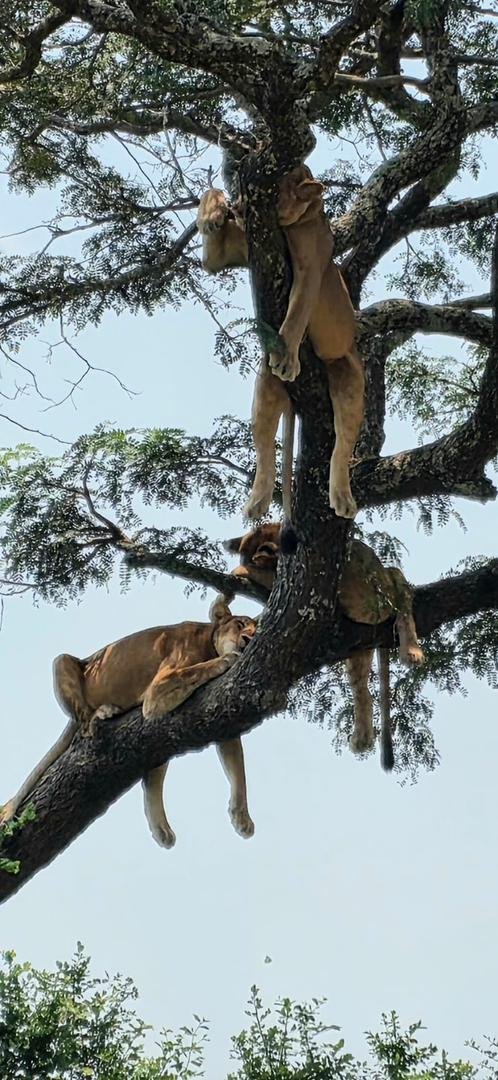
27. Tree-Climbing Lions of Ishasha
Uganda's best-known wildlife sighting is not a gorilla. In the Ishasha sector of Queen Elizabeth National Park, lions regularly rest in the branches of large fig trees. The behaviour is not fully explained. The usual suggestions are catching the breeze, avoiding biting insects on the ground, or watching for prey across the open ground. Whatever the reason, Ishasha is one of the few places it happens regularly, and sightings are never guaranteed. Allow a full day in the sector, because the lions move between fig trees, and your driver-guide will check current sightings with the rangers on arrival.
What This List Means for Your Itinerary
Best Safari for Primates
We recommend Kibale National Park for travellers who want a dedicated primate experience, while Kalinzu Forest Reserve is an excellent option for itineraries connecting Queen Elizabeth National Park with Bwindi. We choose between them according to the route, available time and the wildlife experiences you most want. For gorillas, Bwindi Impenetrable National Park is the main destination, and Mgahinga Gorilla National Park adds golden monkeys.
Best Safari for Birding
For birders, Uganda covers lowland forest, Albertine Rift endemics and wetland species within one route. We recommend Mabamba Swamp for shoebills, Semuliki National Park for lowland forest specialties, and the Rwenzori/Bwindi region for Albertine Rift endemics. Add Murchison Falls if you also want strong wetland and savannah birding.
Best Safari for Classic Game Drives with Unique Species
For travellers who want unusual mammals plus dependable wildlife viewing, combine Murchison Falls National Park, Queen Elizabeth National Park, and Lake Mburo National Park. You'll cover Nile ecosystems, kob, giraffe, cranes, zebra, crocodiles, and tree-climbing lions.
Best Safari for Remote Wilderness
If you love wild, less-visited places, Kidepo Valley National Park is the answer. It gives you a chance for dik-dik, klipspringer, reedbuck, patas monkeys, and some of Uganda's most dramatic savannah scenery.
When Is the Best Time to See Unique Animals in Uganda?
The dry seasons are usually best for wildlife viewing: December to February and June to September. During these months, roads are easier to use, vegetation is thinner in savannah parks, and animals gather more predictably around water sources. Birding can also be excellent in wetter periods, but for a general wildlife safari, the dry months give you the easiest overall conditions.
For forest species like gorillas, chimpanzees, and golden monkeys, you can travel year-round, but drier trails are often more comfortable. Gorilla permits in particular are limited by date and sector, so it is worth confirming those before fixing the rest of the route.
Frequently Asked Questions About Remarkable Animals in Uganda
What rare animals can you see in Uganda?
Uganda is home to a remarkable range of rare species, including golden monkeys in Mgahinga, shoebills in Mabamba and Murchison Falls, Rothschild's giraffes in Murchison Falls, pangolins in protected reserves, patas monkeys in Kidepo, and even elusive mammals like the African golden cat, although that cat is not a realistic target. On the birding side, the Albertine Rift adds special species that make Uganda stand out from many other safari destinations.
Where can I see shoebills in Uganda?
The best-known place is Mabamba Swamp near Entebbe, which is ideal if you want a birding trip before or after your international flight. You can also look for shoebills in the Murchison Falls National Park delta on a Nile boat excursion. Early mornings usually offer the best conditions.
Can you combine these wildlife sightings with gorilla trekking?
Yes — and that's one of Uganda's biggest advantages. You can combine Bwindi gorilla trekking with chimpanzee tracking in Kalinzu Forest Reserve, Mgahinga golden monkey tracking, and game drives in Queen Elizabeth, Lake Mburo, or Murchison Falls. That means one trip can include primates, birds, wetlands, and classic savannah wildlife.
What is the best time to see wildlife in Uganda?
For general wildlife viewing, the dry seasons from June to September and December to February are usually best. Trails are easier, game viewing is smoother, and boat trips are more comfortable. That said, Uganda is a year-round destination, especially if your itinerary mixes forests and savannah parks.
Plan Your Uganda Wildlife Safari
Uganda's wildlife is spread across very different habitats, from the bamboo forests of Mgahinga and the rainforest of Bwindi to the open plains of Murchison Falls and the wetlands around Lake Victoria. Seeing the animals that interest you most depends on choosing the right destinations and allowing enough time in each.
At Orugano Safaris, we arrange private, tailor-made Uganda safaris with experienced driver-guides, proper safari Land Cruisers and carefully selected midrange or premium accommodation.
Tell us which animals you most want to see, your travel dates and how many days you have available. We will recommend a practical route, explain which sightings are reasonably achievable and identify the rarer species that require specialist guiding or a little luck.
Plan your Uganda safari and let us help you build a journey around the wildlife that interests you.