- +256 701 230309
- info@oruganosafaris.com
- Nkuringo Sector, Kisoro, Uganda
- +256 701 230309
- info@oruganosafaris.com
- Nkuringo Sector, Kisoro, Uganda
Lake Bunyonyi Uganda: Ultimate Gorilla Recovery Retreat
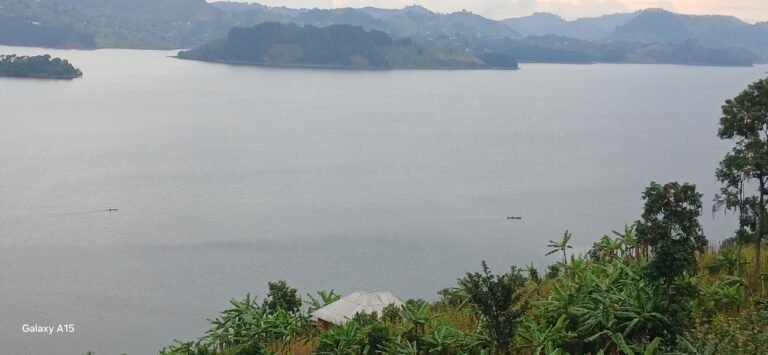
The transition from the dense, humid undergrowth of Bwindi Impenetrable Forest to the open, misty expanse of Lake Bunyonyi Uganda is one of the most stark logistical shifts you will make on a Uganda safari. After three days of physical exertion, scrambling up 2,000-metre ridges, pushing through vines, and the adrenaline-fueled hour spent with a mountain gorilla family, your body usually demands an “off” switch.
At Orugano Safaris, we’ve learned that the 9-hour drive back to Entebbe or the 4-hour dash to Kigali immediately after a trek is a mistake. It robs you of the chance to process what you’ve just seen. Lake Bunyonyi is that switch. As the mist rises off the water each morning and dugout canoes glide silently between the 29 islands, the pace of your trip slows down to match the ripples on the lake. It is not just another destination on a map; it is the reward for the effort you put in at Bwindi.
Quick Facts for Your Field Guide
Before you dive into the water or book a boat, here are the operational realities of Lake Bunyonyi:
- Location: Tucked into the Kigezi Highlands between Kabale and Kisoro, about a 2-hour drive from our Orugano Bwindi Lodge.
- Dimensions: Approximately 25km long and 7km wide at its broadest point.
- The Islands: There are 29 distinct islands, each with its own history, from leprosy colonies to punishment sites.
- Elevation: 1,960m above sea level. This means it is cool. Expect morning temperatures around 12–15°C.
- Health & Safety: This is one of the few lakes in Africa that is bilharzia-free. There are no hippos and no crocodiles. It is safe for swimming, provided you are a confident swimmer given the depth.
- The Depth Debate: You will hear many guides claim this is the “second deepest lake in Africa” at 900m. While this figure is a staple of local lore, 2026 scientific assessments suggest a more realistic maximum depth of around 40–44m. Whether it’s 40m or 900m, it’s deep enough that you shouldn’t jump in without a life jacket unless you’re experienced.
- Birdlife: Over 200 species. The name “Bunyonyi” literally translates from the local Lukiga language as “the place of many little birds.”
Lake Bunyonyi Uganda at a Glance
Feature | Lake Bunyonyi |
Best For | Relaxing after gorilla trekking |
Time Needed | 1–2 days |
Signature Experience | Sunrise canoeing |
Swimming | Yes |
Wildlife | Birds & island scenery |
Closest Gorilla Sector | Nkuringo & Rushaga |
Transfer from Orugano Bwindi Lodge | Approximately 2 hours |
The Geological Mystery: Why Lake Bunyonyi Uganda is Not a Crater Lake
Many guidebooks mistakenly label Bunyonyi as a crater lake. Geologically, Lake Bunyonyi Uganda is far more interesting. Approximately 10,000 years ago, a massive volcanic eruption in the Virunga chain sent a lava flow that dammed the Nyamuriro river valley. Instead of water flowing away, it pooled and rose, eventually flooding the entire valley system.
The 29 islands you see today were once the peaks of mountains. This explains why the shoreline is so jagged and why the lake has so many deep “fingers” stretching into the hills. It also explains the extreme depth; you are effectively floating over a submerged mountain range. For our guests who have just completed the Sabinyo Volcano Hike, understanding this connection to the volcanoes makes the landscape feel like one continuous story.
Why Visit Lake Bunyonyi?
1. Recover after Gorilla Trekking
This is the primary reason we include Bunyonyi in our tailor-made Uganda safaris. Gorilla trekking in Nkuringo or Rushaga involves steep climbs that can last anywhere from two to seven hours. By the time you reach the lake, your calves will be tight and your energy will be low. Bunyonyi offers a sedentary but spectacular environment where the most strenuous activity you have to perform is holding a pair of binoculars or a sundowner.
2. Uganda’s Most Beautiful Lake
While Murchison Falls has its power and Lake Victoria has its scale, Bunyonyi has a purely aesthetic quality that feels almost European, until you see the terraced hills. The Bakiga people have farmed these vertical slopes for centuries, creating a patchwork of greens, browns, and yellows that wrap around the water. On a clear morning, the reflection of these terraces in the still water is the best photographic opportunity in southwestern Uganda.
3. Canoeing Between Islands
You haven’t experienced Bunyonyi until you’ve been in a traditional dugout canoe. Carved from a single eucalyptus or mahogany trunk, these boats are the primary mode of transport for locals moving produce between islands. They are narrow and sit low in the water. We recommend a guided sunrise canoe trip; the water is at its calmest, and the mist creates a “white-out” effect where the islands seem to float in mid-air.
4. Safe Swimming
The absence of hippos and crocodiles is a major differentiator. In most East African lakes, putting a toe in the water is a gamble with parasites or predators. In Bunyonyi, the water is clean and fresh. Most lodges have designated swimming docks. Be warned: the water is refreshing but can be bracingly cold in the early morning.
5. Birdwatching (The Place of Little Birds)
Even if you aren’t a dedicated birder, you will notice the activity here. The African Finfoot is a rare prize often spotted near the reeds of Bushara Island. You will certainly see Malachite Kingfishers darting like blue sparks across the water, and the Grey Crowned Crane, Uganda’s national bird, is a frequent sight in the surrounding wetlands.
6. Culture and History
The lake is a living museum of Bakiga and Batwa history. From the blacksmiths of the mainland to the dark history of Punishment Island, every patch of land has a story. Visiting these sites isn’t about “tourist performances”; it’s about understanding how people have adapted to living on these steep ridges for generations.
What stands out first is what we call the region’s vertical engineering. The Bakiga did not inherit gentle farmland. They carved usable gardens out of steep ridges by building terraces that hold soil in place, slow runoff, and make cultivation possible on slopes that would otherwise wash away in heavy rain. When you look across Lake Bunyonyi Uganda from a lodge balcony, those neat contour lines are not decoration. They are labour. In many villages, the terraces still support beans, Irish potatoes, sorghum, and peas, and you can see how every metre of land is used carefully because flat ground is scarce.
The Batwa story around the lake is different and more complicated. After removal from the Bwindi forest, many Batwa families were pushed towards the edges of settled communities and lake environments where access to land was limited and livelihoods had to change fast. Some community visits around Bunyonyi help you understand that transition more honestly, especially when paired with a proper Batwa Cultural Experience either before or after your lake stay. If your trip also includes southern Bwindi or Mgahinga Gorilla National Park, this history stops feeling abstract because you can see how close these landscapes are and how different access to them has become.
Blacksmithing is another thread that still gives this region its identity. For generations, blacksmiths in Kigezi made practical tools for mountain farming: hoes, knives, spear points, and repair pieces for daily work. In a place built on cultivation and climbing, metalwork was not decorative status craft; it kept households running. When we arrange village walks, guests who stop at blacksmithing points usually remember the rhythm first: hammer on heated metal, bellows pushing air, sparks in a dark workshop. It connects directly to the same practical mountain culture you see in the terraces, the canoe landings, and even the trail systems that link Bunyonyi to the broader highland routes towards Bwindi and the Sabinyo Volcano Hike.
The Islands of Lake Bunyonyi: A Map of History
You won’t have time to visit all 29 islands, but these four are the ones that define the lake’s character.
Punishment Island (Akampene)
This is the smallest and most infamous island on the lake. According to BBC News, it is little more than a patch of grass with a few dying trees. In the past, the Bakiga community used it to abandon unmarried girls who became pregnant. Since most girls couldn’t swim, they were left there to starve or drown. It was a brutal form of social control. Often, men who couldn’t afford the “bride price” (cows) would row out to the island to “rescue” a girl and take her as a wife. The practice stopped in the mid-20th century, but the island remains a stark reminder of the region’s patriarchal history.
Bwama Island (The Leprosy Colony)
In 1921, an English missionary named Dr. Leonard Sharp arrived in Kabale. By 1931, he had established a leprosy treatment centre on Bwama Island. He built a church, a hospital, and “model villages” where patients could live in a “happy community” while being treated. Today, the island houses a secondary school and a medical centre, but you can still see the original colonial-era buildings that once served as a sanctuary for those shunned by society.
Bushara Island
If you want to see the “little birds,” go to Bushara. This island is a conservation success story, heavily forested compared to the farmed terraces of the mainland. It’s the best place for a nature walk. The trails are well-maintained, and because there are no residents other than lodge staff, it is incredibly quiet.
Sharp’s Island (Njuyeera)
This was Dr. Leonard Sharp’s private residence. He built a small white cottage here (Njuyeera means “white house”) that looked like his family home back in the UK. The gardens are still beautiful, filled with exotic plants he brought from Europe and elsewhere in Africa. It feels like a time capsule of the 1930s.
Bucuranuka Island (The Upside Down Island)
If Punishment Island is the most somber, Bucuranuka is the most legendary. Local oral history tells of an old woman who approached a group of twenty young men brewing sorghum beer on the island. When she asked for a sip, they rudely refused her and told her to leave. She asked for a lift to the mainland, which one young man kindly provided. As soon as they reached the shore, the island literally turned upside down, swallowing the remaining nineteen men and their beer. Today, locals still point to Bucuranuka as a warning against the lack of hospitality—a core value in Bakiga culture.

Experience Portfolio: What to Do at 1,960m
Sunrise Canoe & Sunset Cruises
Morning is for Dugouts; Evening is for Motors. A sunrise dugout canoe trip is silent and meditative. A sunset cruise in a motorized boat is for the views. We usually arrange for a boat to take you out around 5:00 PM with some refreshments so you can watch the sun drop behind the Kigezi ridges.
Hiking the Bakiga Trails
The hills around Bunyonyi are crisscrossed with footpaths used by locals to reach their gardens. These are not “manicured” hiking trails; they are steep, often muddy, and will test your heart rate. The reward is a 360-degree view of the entire lake system. If you want a challenge, ask your guide to take you up to the “Top of the World” viewpoint.
Top of the World: The Kyevu Ridge Hike
For guests who still have energy after Bwindi, the hike to the Kyevu hill viewpoint—locally known as the “Top of the World”—is the definitive Lake Bunyonyi Uganda experience. This is not a casual stroll; it is a steep ascent through terraced potato patches and small homesteads.
From the summit at roughly 2,200 metres, the topography of the lake finally makes sense. You can see all 29 islands spread out like green emeralds on a blue cloth. On a clear morning, you can look west across the Echuya Forest Reserve to see the three distinct cones of the Virunga Volcanoes: Muhabura, Gahinga, and Sabinyo. It provides a visual bridge between your time trekking gorillas and your time on the water. We recommend doing this hike at sunrise to see the mist trapped in the valleys below you.
Village Walks and Community Engagement
We work with local communities to offer walks that go beyond the shoreline. You can visit a traditional healer, watch blacksmiths at work, or see how Obushera (a local sorghum drink) is made. These interactions are authentic; you are walking through people’s yards and seeing their daily lives.
Photography
Bunyonyi is a high-contrast environment. The morning mist requires a steady hand and often a higher ISO, but once the sun burns through, the greens of the terraces are incredibly vivid. We recommend bringing a wide-angle lens for the landscapes and a 300mm+ for the kingfishers.
Why We Recommend Lake Bunyonyi After Gorilla Trekking
Why We Prefer Bunyonyi After Bwindi Rather Than Before
This is a core Orugano itinerary principle. Before trekking, guests are often too excited or focused on reaching Bwindi to enjoy the lake, and permit dates are fixed. After trekking, the muscles are sore, the adrenaline drops, and the time pressure disappears. Lake Bunyonyi fits much better as the reward rather than the preamble.
As an operator, we see the “Gorilla Hangover” frequently. Guests spend months preparing for Bwindi. They buy the boots, they take the fitness classes, and they fly halfway around the world. Once the trek is over, there is an emotional and physical crash.
The physiology of recovery is straightforward. A gorilla trek is not just a walk in the forest; it is a series of steep ascents, adrenaline spikes, and several hours at altitude that leave most travellers with low-grade muscle inflammation and altitude fatigue. Lake Bunyonyi Uganda works well at this point because the activity level drops without the trip feeling over. You can still swim or paddle, but you are no longer forcing your body through vertical mountain trails.
The Bunyonyi microclimate helps more than most itineraries give it credit for. The cooler air at roughly 1,960 metres, the quiet water, and the lack of traffic noise create a setting where people actually rest. Even the mornings force you to slow down a bit; if you step onto the deck before breakfast, you usually want a fleece. That matters after Bwindi, where many guests have been up before dawn, trekking under pressure, and then packing immediately for the next move. We often see shoulders drop within an hour of arrival at the lake. Good recovery here is not about luxury for its own sake. It is about giving the body a stable temperature, gentler movement, and uninterrupted sleep.
There is also a mental factor we see on standard multi-country safaris: checklist fatigue. If you go straight from gorillas to another border, another briefing, another game drive, and another hotel check-in, the trip starts to blur. Guests stop absorbing what they are seeing because they are always in transit. Bunyonyi breaks that cycle. Instead of chasing the next item, you sit with what you have already done. You sort your photos, talk through the trek properly, and end Uganda on a place that asks very little from you physically. That is why we recommend it so consistently, especially after southern Bwindi.
If you stay at our Orugano Bwindi Lodge, you are right on the edge of the forest. It’s magnificent, but it’s intense. Moving to Lake Bunyonyi for your final 48 hours in Uganda provides the “decompression chamber” you need. It’s the difference between ending your holiday in a car and ending it on a balcony overlooking 29 islands.
Sample "Recovery" Itinerary
- Day 1: The Trek. Morning gorilla trek in Bwindi (Nkuringo/Rushaga sectors). Afternoon massage and celebration dinner at Orugano Bwindi Lodge.
Pro Tip: Keep your daypack packed for recovery, not just trekking. A dry T-shirt, electrolyte tablets, and sandals for the lodge save you from sitting in damp boots all afternoon. If you are booking a short extension, this pairs well with ask us about combining Lake Bunyonyi with your gorilla trekking itinerary. - Day 2: The Transition. Breakfast overlooking the forest. A 2-hour scenic drive to Lake Bunyonyi Uganda. Check-in by lunch. Afternoon sunset cruise to Punishment and Bwama Islands.
Pro Tip: If you are routing via Rwanda before or after the lake, plan around the Katuna/Gatuna border gate with daylight in hand rather than arriving late and hoping it moves fast. Border formalities are usually simplest earlier in the day, and this is not the transfer to leave tight if you want to make a boat departure on time. - Day 3: The Slow Down. Sunrise canoe trip. Mid-morning swim or reading on the deck. Optional village walk for those with lingering energy.
Pro Tip: The best photography reflections usually happen early, roughly between 6:30 AM and 8:00 AM, before the wind starts ruffling the surface. If you want mirror water, do not leave your camera in the room until breakfast. - Day 4: Departure. Final breakfast before the drive to Entebbe or Kigali for your flight home.
Pro Tip: If Lake Bunyonyi is one stop inside a longer circuit rather than your final rest point, build it into a broader route like our Uganda Highlights Safari so the lake works as a recovery break rather than a rushed overnight.
Lake Bunyonyi vs. Lake Mutanda: Which One?
Many of our guests ask which lake to choose. While we love both, they serve different purposes.
Feature | Lake Bunyonyi | Lake Mutanda |
Vibe | Cultural, Historical, Social | Wild, Remote, Quiet |
Views | Terraced hills and islands | Massive Virunga Volcanoes |
Swimming | Excellent, safe, bilharzia-free | Safe, but fewer facilities |
Activities | Island hopping, village walks | Canoeing, Volcano hiking |
Proximity | Between Kabale and Kisoro | Closer to Kisoro/Mgahinga |
Accommodation | High density (Budget to Luxury) | Sparse (Mostly Mid-range/Luxury) |
Which Lake Should You Choose?
Choose Lake Bunyonyi Uganda if:
- you want to unwind after trekking
- you enjoy history and island stories
- you want island exploration and boat activities
- you want safe swimming
Choose Lake Mutanda if:
- volcano scenery is your absolute priority
- you’re visiting Mgahinga Gorilla National Park
- you enjoy canoe photography with mountain backdrops
- you want a more remote feel with fewer people
Wildlife and Nature
While you won’t see elephants or lions here, Bunyonyi is a paradise for smaller wildlife.
The soundtrack of the lake is one of the first things you notice if you wake early enough. Hadada Ibises start before the sun has fully cleared the ridges, giving that loud, rough call that bounces across the water and sounds much closer than it is. Later in the morning, the African Fish Eagle takes over with the cleaner, carrying cry most travellers already know from safari films, but here it feels different because the sound travels over open water rather than across savannah. On still days, you can hear one bird from the far side of a bay while watching canoes move through mist in the foreground. Lake Bunyonyi Uganda is quiet compared with most safari stops, so every bird call feels amplified.
If you spend time near reeds, gardens, and lodge edges, the species list grows quickly. The Bronzy Sunbird flashes through flowering shrubs, especially where lodges keep ornamental plants. Fan-tailed Widowbirds work the open grass patches and cultivated edges, and Swamp Flycatchers sit low around wetter shoreline pockets waiting for insects. Add the regulars like Malachite Kingfisher, Pied Kingfisher, Great Cormorant, and Yellow-backed Weaver, and the lake stops being “just a scenic place” very quickly. Serious birders can put in proper hours here, but even non-birders tend to remember the Lake Bunyonyi Uganda soundscape because it runs from dawn through dusk without feeling busy or forced.
- Birds: Look for the Malachite Kingfisher, Pied Kingfisher, African Fish Eagle, Great Cormorant, Bronzy Sunbird, Fan-tailed Widowbird, and Swamp Flycatcher. The reeds are often buzzing with Yellow-backed Weavers.
- Aquatic Life: You might spot the African Clawless Otter if you are very quiet during a morning paddle. The lake is stocked with crayfish (a local delicacy, try the “Bunyonyi Crayfish” at dinner) and Tilapia.
The crayfish story is a good example of how lake ecology and tourism often intersect in practical ways. The species most people eat around Bunyonyi is the Louisiana Red Claw, which is not native to this part of Uganda. It was translocated into East Africa in the 1970s, moving through Kenya before being introduced into Ugandan waters. Over time, it established itself well enough in Lake Bunyonyi to become part of the local food economy and lodge menus. So when you see crayfish on the dinner board, you are not looking at some ancient Kigezi staple; you are seeing a relatively recent ecological arrival that found the lake suitable.
What happened next is pure safari-country branding: the crayfish became the “Bunyonyi Lobster”. Lodges serve it grilled, fried, or in simple butter-and-garlic preparations because the selling point is not culinary complexity; it is the novelty of eating freshwater crayfish after a gorilla trek with a view over the lake. Some guests love it, some say it is more about the setting than the flavour, but it has become part of the Bunyonyi routine all the same. If you are curious, try it once. Just do not arrive expecting Indian Ocean seafood standards from a highland lake kitchen.
- Flora: The terraces are usually planted with sorghum, potatoes, and beans. It’s a masterclass in mountain agriculture.
Best Time to Visit
- Dry Seasons (June–August, December–February): The best for photography as the skies are clearer, though the mist is most dramatic in the early mornings of these months.
- Rainy Seasons (March–May, September–November): The landscape is at its greenest. Expect afternoon thunderstorms. The rain can make the hillside trails very slippery, so good hiking shoes are non-negotiable.
Where to Stay on Lake Bunyonyi
Selecting the right base for your stay in Lake Bunyonyi Uganda depends on whether you want ridge-top views or direct lake access. For a deeper look, see our separate guide to the Best Lodges on Lake Bunyonyi (2026 Guide).
- Luxury: BirdNest Resort – ideal for couples and post-gorilla relaxation with a unique lake-carved pool.
- Mid-range: Bunyonyi Rock Resort – excellent lake views, stone cottage architecture, and great value.
- Mid-range: Arcadia Cottages – the best 360-degree panoramic views from the ridge above the lake.
- Budget: Itambira Island – a quiet, eco-friendly island experience for those wanting to disconnect.
The Logistical Roadmap
Lake Bunyonyi Uganda from Kabale: what does the final approach feel like?
From Kabale town, the run to the lake is short in pure distance but slower than first-time visitors expect because the road drops and bends hard as it approaches the shoreline. The last stretch is steep and winding, with tight corners and regular local traffic moving produce, schoolchildren, and motorcycles between hill settlements. If you are arriving after a long overland day, this is the point where the scenery improves dramatically but the driving speed drops. It is worth knowing in advance so you do not look at a map, see a small distance, and assume it will be ten easy minutes.
Lake Bunyonyi Uganda from Kigali: how does the Katuna/Gatuna border crossing work?
For guests coming from Kigali, the usual route runs north to the Gatuna border on the Rwanda side and Katuna on the Uganda side, then onward through Kabale to the lake. In clean traffic, it is one of the most efficient ways into southwestern Uganda, but border time is the variable. On a smooth day, formalities move quickly. On a busy day, especially around public holidays or heavy commercial traffic, delays stack up. The practical fix is simple: carry your passport where it is easy to reach, keep your visa status clear before departure, and avoid planning a tight lunch or activity booking at the lake on the same afternoon. If you tell us your arrival airport and routing, we can advise whether Kigali still gives you the best approach.
Lake Bunyonyi Uganda from Nkuringo: why does a short distance take time?
From Nkuringo in southern Bwindi, the route is scenic and slow. You are crossing mountain country, not cruising a highway, and the passes demand patience. The views are excellent on a clear day, but this is a drive of ridges, descents, trading centres, and occasional rough patches rather than sustained speed. Guests often assume that because Lake Bunyonyi and southern Bwindi look close on a map, the transfer will be quick. In practice, you should treat it as a proper half-day movement once stops, photos, and road conditions are factored in. The upside is that it links well with southern circuits that include Bwindi, Kisoro, and even onward adventures around Mgahinga Gorilla National Park.
FAQ: Practical Realities
Can I really swim in Lake Bunyonyi?
Yes. It is bilharzia-free, and there are no dangerous animals. However, the water is deep and there are no lifeguards. Only swim if you are confident.
How many days do I need?
Two nights is the minimum to feel the benefit of the “recovery.” Three nights is better if you want to actually do the hikes and the village walks.
Is it near Bwindi?
Yes. Lake Bunyonyi Uganda is about a 2 to 2.5-hour drive from the southern sectors of Bwindi Impenetrable National Park (Nkuringo/Rushaga), making it an easy addition to our gorilla trekking packages.
How far is it from Kigali?
About 3 to 4 hours including the border crossing. It is a very popular stop for guests doing the “Uganda via Rwanda” route.
Is there WiFi on the islands?
At the main lodges, yes, but do not expect city-grade stability. Signal strength varies by property, weather, and exactly where your room sits on the slope. If you need to upload large files or take a fixed-time work call, tell us in advance and we will guide you towards the most reliable options.
Do I need a life jacket for the boat?
Yes. We strongly recommend wearing one on both motorboats and dugout canoes, even if you are a confident swimmer. Lake Bunyonyi is safe in terms of crocodiles and bilharzia, but it is still deep water, mornings can be cold, and weather can shift faster than first-time visitors expect.
Can I buy local crafts at the lake?
Yes, though the best range is often in the wider Kabale and Kisoro trading circuit rather than only at lodge curio tables. You will usually find baskets, woven items, wooden carvings, and small souvenirs either through community stops around the lake or in the Kisoro and Kabale markets if your route allows time.
Why Most Gorilla Trekkers Wish They Had Stayed Longer
We see it every week. Guests book one night at Bunyonyi as a “quick stop” on the way back to the airport. They arrive at 4:00 PM, see the mist setting in, take one boat ride, and then have to leave at 8:00 AM the next day. One of the most common comments we hear from guests is: “I wish we had stayed another night.”
Bunyonyi isn’t a “checklist” destination. You don’t come here to tick off the Big Five. You come here to let the dust of the safari settle. It’s the place where you finally look through your 500 gorilla photos, share a drink with your guide, and realise exactly where you are in the world.
Don’t rush the end of your journey. Give yourself the recovery you’ve earned.