Nkuringo gorilla trekking has long carried a reputation as Bwindi’s most challenging sector, but 2026 brings major changes. Historically, this sector of Bwindi Impenetrable Forest carried a reputation for being the “punisher”: a place where the roads were as brutal as the steep mountain slopes. You might have read trip reports from 2022 or 2024 describing 3-hour bone-jarring drives and vertical climbs that left even fit hikers gasping.
But the reality on the ground in June 2026 has changed. Does the new road infrastructure mean gorilla trekking in Nkuringo is no longer difficult? Not exactly. While your vehicle has a much easier time getting to the trailheads, the forest itself hasn’t flattened out. However, the logistical nightmare of reaching the gorillas is largely a thing of the past.
Last updated: June 2026 following a field inspection by the Orugano Safaris team.
Why Nkuringo Historically Had a Reputation for Difficult Access
For years, Nkuringo was the sector we only recommended to the most hardcore adventure travelers. The barriers weren’t just the gorillas’ location, but the physical struggle of the journey itself.

The steep roads and the “Top to Bottom” trek
Previously, if you stayed in the lodges at the top of the ridge, you had to walk all the way from the top of the mountain to the bottom before you even reached the forest boundary. This added an hour of downhill descent and, more painfully, an hour of steep ascent at the end of your day when your legs were already spent. In some cases, the new access roads have halved this journey. We now have points where we can drive you to within 500 meters of the gorillas, involving a manageable 100-meter descent followed by 400 meters of flat terrain.
Rough surfaces: Nkuringo gorilla trekking’s historic “Muko Crawl”
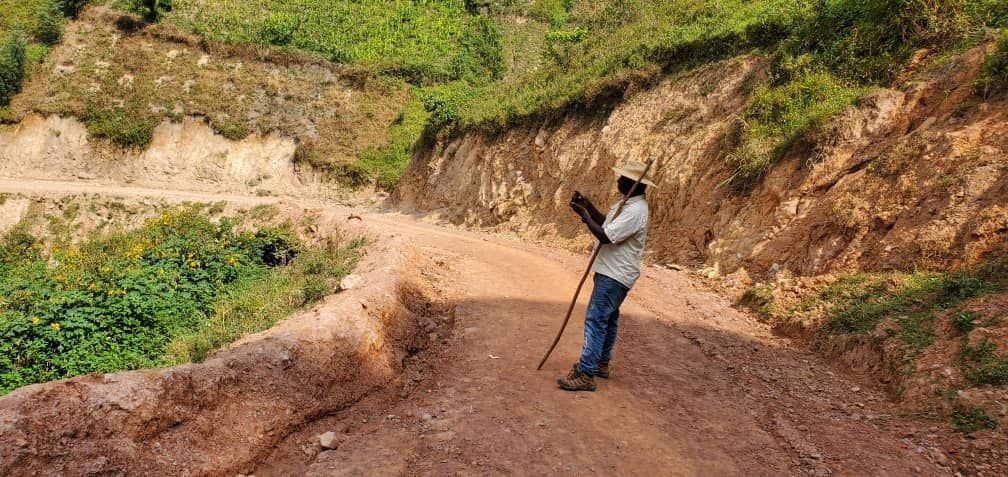
The road from Muko to Nkuringo used to be the stuff of safari legends, and not the good kind. It was a 2.5-hour ordeal on a surface that resembled a dried riverbed more than a road. If it rained, that time could easily stretch to 4 hours. Under normal conditions, the journey now typically takes between one and one-and-a-half hours. The drainage systems have finally been fixed, meaning the deep ruts that used to trap even the best 4×4 Land Cruisers are gone.
Long travel times from the tarmac
What used to take 3 hours from the main tarmac road is now a consistent 1.5-hour drive. Whether you are coming via Rushaga and Rubuguli or taking the road from Kisoro town, you are now driving on high-quality, well-maintained murram. It’s still a “dirt road” in the technical sense, but it’s smooth enough that you won’t feel like you’ve done a workout before you even reach the park gates.
What Has Changed in 2026?

| Route | Previous Travel Time | Current Travel Time (2026) |
|---|---|---|
| Muko to Nkuringo | 2.5–4 hrs | 1–1.5 hrs |
| Kisoro to Nkuringo | 2 hrs | 1–1.5 hrs |
| Kigali to Nkuringo | 5–6 hrs | 4–5 hrs |
| Trek start from ridge lodges | 1 hr walk | Often 10–30 mins |
The biggest game-changer is the strategic improvement of the gorilla trekking roads that lead directly into the forest buffer zones around Bwindi.
Exact roads improved
The local government and park authorities have focused on the Mutugunda road, which now connects seamlessly to the Kahurire road. This is critical because of how the gorillas move. When the families are located in the Kyangara area, there is no longer a need to drive all the way to Kahurire. We now have two trekking points in Kyangara where cars can turn around comfortably.
Here is what this looks like for you:
- The Mutugunda Connection: The Mutugunda road has been significantly improved and remains accessible even during most wet-season conditions. It connects to the Kahurire road and is used when the gorillas move towards the Kyangara section. With this road, the vehicle moves 80% down the hill and waits for the guests to finish the trekking. From the road, the guests take a small descent of no more than 100m then a flat land to begin the trek.
- The Nteko Road: The Nteko road allows vehicles to descend close to the valley. Guests disembark and begin the trek from there. There are no sharp corners on the Mutugunda or Nteko roads.
- No Sharp Corners: The Kahurire descent still has a sharp bend — the vehicles stop at about the 50% descent mark, turn around, and wait for the guests to go back up after trekking. There are no such sharp corners with the Mutugunda and Nteko roads.
- The Kahurire Short-cut: The Kahurire road was originally built to ease transport but suffered heavy rain damage in previous years. In 2026, it is accessible. From the UWA starting point down to Kahurire, we drive about 50% of the downward and upward journey. We park, the guests descend on foot, find the vehicles waiting on the way back up, and then drive back to the UWA offices. It halves the hiking distance compared to the old approach. This is one of the biggest practical improvements for Nkuringo gorilla trekking in 2026.
Faster exits from the forest
Because we can now get vehicles closer to where the gorillas frequent — specifically at Kahurire, Kyangara, and Nteko — guests are often leaving the forest by midday when tracking at these locations. In 2024, a midday finish in Nkuringo was impossible; in 2026, it’s becoming the standard for these specific locations. To reach the Kyangara area, you pass via Mutugunda at the place with the Mumba Seed School signpost. The road is very visible, then you descend with it to Kyangara. With this road you can access the gorilla families in that section.

If the gorillas are at Kahurire, Nteko, or near Mutugunda, your trek is significantly easier. When they are at the Kyangara section of the Mutugunda area, you are looking at a walk of about 500 meters to reach them. They are often found in the primary forest here, meaning you get that deep-jungle feel without the 6-hour slog.
Does This Mean Gorilla Trekking Is Easier?
We have to be honest with you: the road is easier, but the forest is still Bwindi.
In Nkuringo, there is currently only one truly difficult trekking location left: the area around Murole. Gorilla families are wild; they move based on food availability. While the new roads get you closer to the “standard” spots, if your assigned family decides to head toward Murole, you are in for a physically demanding challenge.
The “Knee Factor”
Getting to the gorillas in 20 minutes instead of an hour is a massive improvement, but in Nkuringo, that 20 minutes still often involves going downhill. If you have chronic knee problems, the descent can be harder than the climb.
If you are worried about your knees, we still recommend the Rushaga sector. In Rushaga, you can get out of the car and meet the gorillas within 10 minutes on relatively flat ground. In Nkuringo, what was once a “trekking distance” is now a “short walk,” but it’s a short walk on a 30-degree incline. You will still need your boots on and your gaiters tight.
Is Nkuringo Gorilla Trekking Still the Most Difficult Sector?
Yes and no. It depends entirely on which family you are tracking.
At the time of writing (June 2026), the most strenuous hikes generally happen only when gorillas are in the Murole section, where guests should expect a steep descent. However, gorilla movements change daily and no sector can guarantee an easy or difficult trek.
Even in Rushaga, which is known for being “easier,” if you track at Nyabaremura, you should expect to work for it. The road there has been improved, but the hill doesn’t care about the road.
Field Observation: We recently spoke with Mr. Byabagambi, a local farmer whose land borders the forest. He showed us the “old trail” guests used to use. He laughed because the new road now cuts right through what used to be the first 45 minutes of the morning hike. “Now,” he said, “the guests arrive at the forest edge with dry shirts. Before, they were sweating before they saw the first tree.”
Should You Choose Nkuringo?
With the road improvements of 2026, Nkuringo gorilla trekking has lost its “fear factor.” You should choose this sector if you want:
- Spectacular scenery: The views of the Virunga Volcanoes from the Nkuringo ridge are objectively better than any other sector.
- Fewer visitors: Even with better roads, Nkuringo remains less crowded than Buhoma.
- Easier Access from Kigali: If you are flying into Rwanda, the drive to Nkuringo is now incredibly efficient. You can cross the border and be at your lodge in roughly 4 hours on roads that are 90% high-quality.
- The Nteko-Buhoma Link: The road leading off to the river along the Nkuringo-Buhoma track (the Ivy Trail) now goes all the way to the bridge at the River Ivy. You no longer need to walk from the top of the ridge to the river. This has turned the famous “cross-forest walk” into a much more manageable day trip.

What Has Not Changed?
While road access has improved dramatically, visitors should remember that:
- Gorilla trekking still takes place in mountainous terrain — but one no longer needs to trek from the top of the mountain down to the forest floor.
- Trekkers should still wear proper hiking boots — comfortable, sturdy footwear is still advisable.
- Hiring a porter remains highly recommended — it is good for the community, and if you have heavy gear, you will enjoy the experience much more.
- Trek durations still depend on where the gorillas nested the previous night — however, unlike before, there are far fewer chances of needing to be carried for failing to make it up the hill after trekking, because in most places the starting point has been reduced to up to 80% of what it was previously.
Practical Advice for Your 2026 Trek
- Check where the gorillas are: Trackers identify the location before you descend. Inform the rangers whether you need an easy or difficult hike — sometimes they assess based on physical appearance, but guests in their 70s have come to Nkuringo specifically for the hiking experience. Ask your guide in the morning if the family is at Kyangara (easy) or Murole (hard).
- Choose your hike: If you want a hardcore hiking challenge, you can still begin from the UWA offices and walk up or down to the gorillas — the option is there for those who want it.
- Season matters: During the dry season, gorillas stay deep in the forest for fruits. During the wet season, they move to the forest edge for fresh bamboo shoots and leaves. The wet season actually makes for shorter (though muddier) treks.
- Pack for the mist: The morning mist in Nkuringo is cold enough that you will need a fleece until at least 10:00 AM.
Nkuringo is no longer the “impossible” sector. It is now an accessible, stunning, and high-reward destination that just happens to require a bit of leg strength.
Frequently Asked Questions
Is Nkuringo still the hardest gorilla trekking sector?
Nkuringo gorilla trekking difficulty depends on which gorilla family is assigned to you. Road access is vastly improved, but families near Murole and Nyabaremura still require strenuous hiking. Other areas like Kyangara and Nteko are now significantly easier.
How long does it take to drive from Kigali to Nkuringo?
The drive from Kigali to Nkuringo now takes approximately 4 to 5 hours, down from 5 to 6 hours previously, thanks to the improved road surfaces and drainage systems.
Can elderly travellers trek gorillas in Nkuringo?
Yes, but fitness levels vary. The new roads reduce the distance walked before entering the forest, but some terrain is still steep. Let us know your mobility level so we can advise on the most appropriate sector for you. Porters are available for hire in all sectors.
Are the roads to Nkuringo paved?
No, the roads are not paved but are maintained as good-quality murram (graded gravel). Yes, the roads are dusty, but guests travel in air-conditioned vehicles.
Which gorilla families are easiest to track?
Any family that is not in Murole. The trackers assign guests to a family on the day depending on where the gorillas are located. Sometimes, we go months without a gorilla family in a given area, and other times they stay longer — it all depends on food availability.
Is a 4×4 vehicle still necessary?
Yes. Since you cannot predict exactly where you will be tracking on any given day, a 4×4 vehicle is still advisable for navigating the roads around Bwindi.
Ready to see the gorillas?
Send us your travel dates and we will check permit availability in real-time. If you aren’t sure which sector fits your fitness level, tell us your arrival airport and we’ll advise on the best route to take.