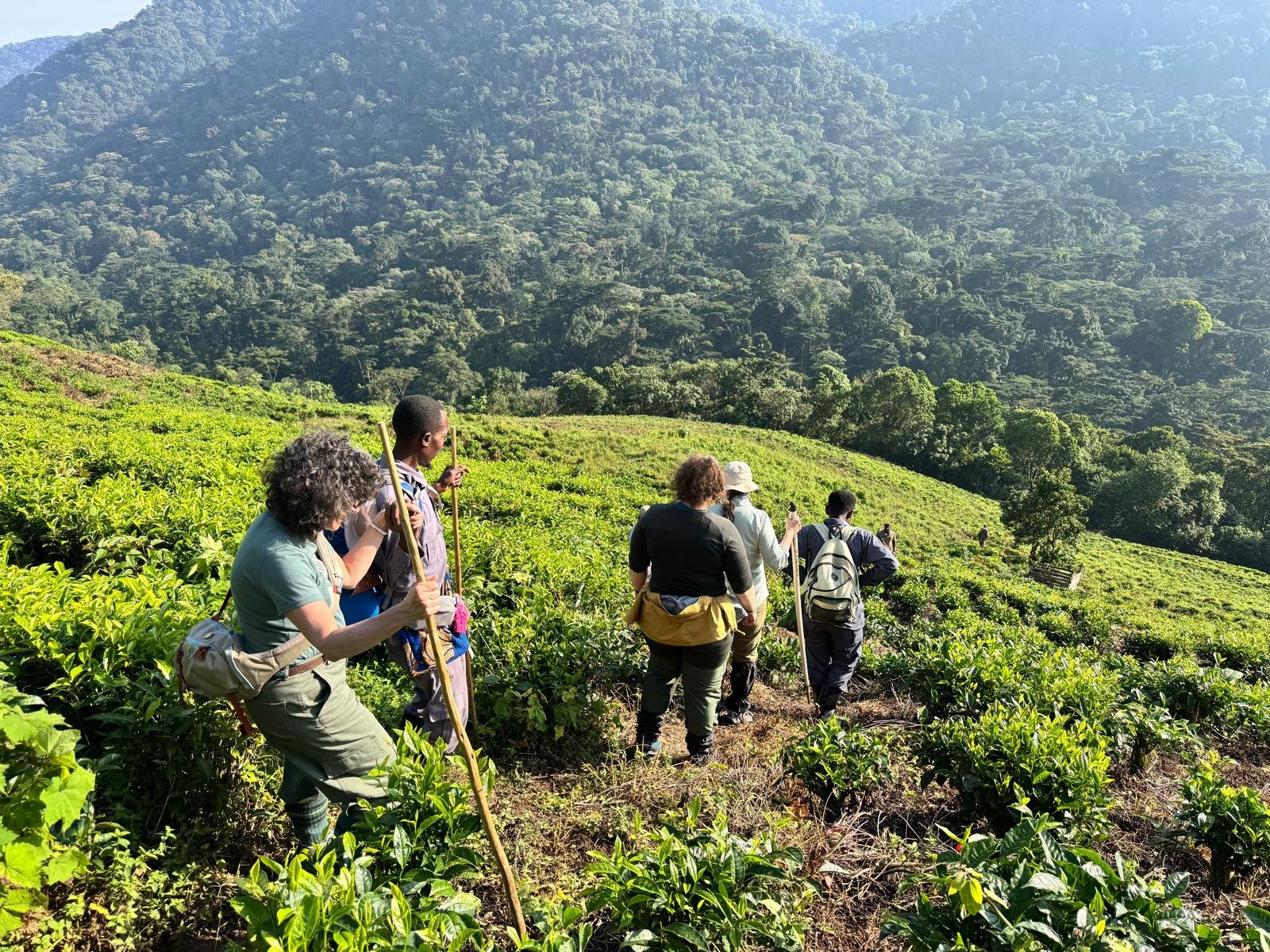
The gorillas do not know which side of the border they are on. The experience around them, however, can be very different.
Rwanda offers the simplest logistics, exceptional high-end accommodation and a polished short-trip experience. Uganda offers lower permit costs, a wider range of accommodation, more varied forest environments and the unique four-hour Gorilla Habituation Experience.
Neither country is automatically better. The right choice depends on your budget, available time, fitness, photography priorities and the kind of safari you want around the trek.
If you are comparing Rwanda vs Uganda gorilla trekking in 2026, the decision usually comes down to four factors: budget, available time, fitness and the kind of safari you want around the trek.
At Orugano Safaris, we arrange gorilla trips in both Uganda and Rwanda and regularly help travellers decide between the two. That means we deal with the real questions travelers ask before paying for a permit: Is Rwanda worth nearly double the price? Is Uganda harder than people expect? Can you land in Kigali and still trek in Uganda without making the trip complicated? This guide answers those questions directly.
Rwanda vs Uganda Gorilla Trekking 2026: At a Glance
| Factor | Uganda | Rwanda |
|---|---|---|
| Standard international permit | US$800 | US$1,500 |
| Standard time with gorillas | Up to 1 hour | Up to 1 hour |
| Gorilla habituation | Available in Bwindi | Not available |
| Main trekking areas | Bwindi and Mgahinga | Volcanoes National Park |
| Airport access | Longer from Entebbe; shorter via Kigali or domestic flight | About 2.5–3 hours from Kigali |
| Accommodation range | Budget to luxury | Strongest at premium and ultra-luxury end |
| Photography | Atmospheric rainforest and varied habitats | Often cleaner sightlines |
| Best for | Value, longer safaris, habituation | Short trips, easy logistics, ultra-luxury |
The Cost Reality: Permits and Pricing in 2026
For most travelers, this is where the decision starts. Rwanda is still the premium-priced option. Uganda is still the value option. But the details matter, especially if you are a foreign non-resident, an East African resident, or looking at low-season dates.
Gorilla Permit Prices in 2026: Uganda vs Rwanda
| Country | Visitor Category | Standard Gorilla Permit | Low-Season Gorilla Permit | Low-Season Dates / Conditions |
|---|---|---|---|---|
| Uganda | Foreign Non-Resident (FNR) | $800 | $600 | April, May, November |
| Uganda | Foreign Resident (FR) | $700 | $500 | April, May, November |
| Uganda | Rest of Africa (ROA) | $500 | $400 | April, May, November |
| Uganda | East African Citizen (EAC) | UGX 300,000 | UGX 250,000 | April, May, November |
| Uganda | Gorilla Habituation (FNR) | $1,500 | No published low-season discount | Bwindi only, up to 4 hours with gorillas. This rate is valid through December 31, 2026. From January 1, 2027, the FNR habituation permit will increase to $1,800. |
| Rwanda | Foreign Non-Resident (FNR) | $1,500 | $1,050 | Valid in low season, typically November to May, for qualifying visitors/packages as published by the Rwanda Development Board |
| Rwanda | Foreign Resident (FR) | $500 | Not separately published in the same way | Resident rate applies with valid documentation |
| Rwanda | East African Citizen (EAC) | $200 | Not separately published in the same way | Citizen rate applies with valid documentation |
If you are paying the foreign non-resident rate, Uganda saves you $700 per person on a standard permit. For a couple, that is $1,400 before you even start talking about flights, lodge upgrades, porter fees, or domestic air transfers.
Uganda also has one product Rwanda does not: the gorilla habituation experience in Bwindi. That permit costs the same as a standard Rwanda foreign non-resident permit, but gives you up to four hours with a semi-habituated gorilla family instead of the standard one hour.
Practical point: low-season Uganda permits at $600 are useful if your dates fall in April, May, or November and you are comfortable with a higher chance of rain. The $600 low-season rate applies to Foreign Non-Residents trekking in April, May, or November 2026, as confirmed in the UWA tariff update of February 2026 (source: Uganda Wildlife Authority). That can mean muddy trails, slower hiking, and a real need for gaiters or waterproof boots. It can also mean better value if you do not mind trekking in wet conditions.
Accessibility: Which Country Is Easier to Reach?
Rwanda is simpler on pure transfer time. You land in Kigali and drive about 2.5 to 3 hours to Volcanoes National Park on a paved route. If you are short on time, that convenience is real.
Uganda depends on which route you choose.
If you fly into Entebbe and drive to Bwindi, you should plan for a long road day. Depending on your sector, traffic leaving Kampala, and weather, it is usually a full-day transfer rather than a short hop. Some travelers break it with an overnight stop around Lake Mburo. Others fly domestically to Kihihi or Kisoro, which cuts the road time significantly but adds cost.
The Best of Both Worlds
An increasingly popular option is to fly into Kigali and trek in Uganda. You land in Kigali, cross into Uganda, and trek in Bwindi or Mgahinga on a Uganda permit. For a full route breakdown, read our guide comparing Kigali vs Entebbe for gorilla trekking. That gives you the shorter arrival route associated with Rwanda, but the lower permit pricing of Uganda.
Why this works in practice:
- Kigali to Cyanika border to southern Bwindi/Mgahinga is often the most efficient route for Nkuringo, Rushaga, and Mgahinga-based itineraries.
- For southern Bwindi and Mgahinga, entering Uganda from Kigali can significantly reduce the road journey compared with driving from Entebbe. The best border crossing depends on your final destination and current road conditions.
- You still need to allow time for the border crossing, and you need the right visa setup, but for many itineraries it is the cleanest value-for-time tradeoff.
What you should not expect: a rough, punishing transfer in every Uganda itinerary. Some roads are long, some are winding, and the final approach to certain sectors can still be slow, but the experience varies a lot by entry point, weather, and whether you drive or fly.

How Hard Is the Trek in Each Country?
The hard truth is simple: both can be demanding. Neither country can promise an easy trek, because the gorillas move.
If you're concerned about fitness requirements, read our detailed guide on gorilla trekking difficulty.
Rangers assign groups partly by fitness level, but that is not a guarantee of a short day. A family can nest low one day and move high the next. You may finish in 90 minutes. You may be out for much of the day.
Trek Difficulty Comparison
| Factor | Uganda | Rwanda |
|---|---|---|
| Typical environment | Dense rainforest in Bwindi; bamboo and volcanic terrain in Mgahinga | Bamboo and montane forest |
| Altitude | Varies by sector | Generally high |
| Mud | Common in wet conditions | Also possible in wet conditions |
| Trek duration | Highly variable | Highly variable |
| Easy treks possible | Yes | Yes |
| Difficult treks possible | Yes | Yes |
Rwanda is often perceived as the more manageable option because some trekking routes pass through more open bamboo forest. Bwindi can involve denser vegetation, mud and steep slopes. However, neither country guarantees an easy or difficult trek: the location of your assigned gorilla family on the day is often the biggest factor.
One operational reality people underestimate: the cold morning start. In both countries, especially at higher elevations, you often need a fleece at briefing even if the afternoon ends warm.

Which Country Is Better for Photography?
This depends on what kind of result you care about.
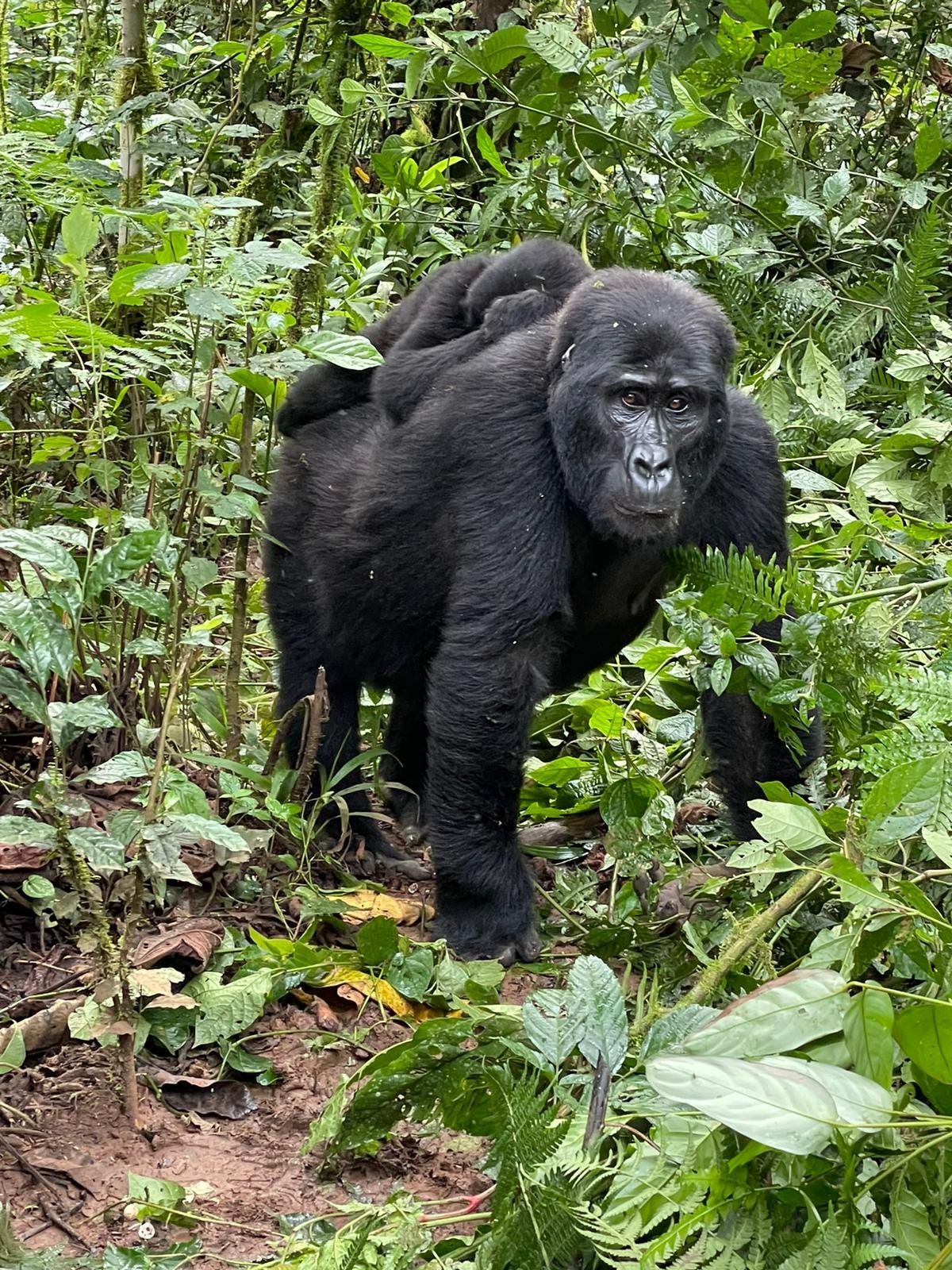
Rwanda is usually easier to shoot. The bamboo zones and more open forest sections often give you more usable light and cleaner backgrounds. If you are trying to come back with technically sharper images, especially without very fast lenses, Rwanda gives you an advantage.
Uganda is harder. Bwindi can be dark, wet, and crowded with leaves, vines, and branches in your frame. You may need higher ISO, faster shutter decisions, and more patience. But when it works, the rainforest context can make the images feel more grounded and less staged.
Honest verdict on photography
For detailed camera settings and lens recommendations, see our gorilla trekking photography guide.
- Choose Rwanda if you prefer cleaner backgrounds and potentially more open sightlines.
- Choose Uganda if you prefer layered rainforest compositions and atmospheric forest context.
- Do not choose a country based on photography alone unless that is the main purpose of your trip. Trek assignment, weather, and where the gorilla family beds the night before can matter just as much as the country.
Crowding and Exclusivity: Will One Feel Busier Than the Other?
This question needs more nuance than most comparison articles give it.
Rwanda can feel more streamlined because access is concentrated through one main gorilla park: Volcanoes National Park. Uganda spreads trekking across Bwindi’s sectors and Mgahinga Gorilla National Park. On paper, Uganda has broader distribution. In practice, your experience depends less on country-level permit totals and more on three things:
- which gorilla family you are assigned,
- how many other visitors are in your briefing cluster that morning,
- how your lodge and transfer schedule are organized.
What usually feels “busy” is not the one hour with the gorillas. That part is tightly controlled in both countries. What feels busy is the morning assembly point, vehicle movement, and how many trekkers and vehicles are using the same briefing point.
Where Rwanda feels more exclusive
- Very polished arrival flow
- Strong premium-lodge ecosystem
- Short transfer time means more travelers can do quick, high-end itineraries
Where Uganda feels more exclusive
- More geographic spread across sectors
- Easier to pair trekking with a less rushed, longer safari
- Some lodges and sectors feel genuinely tucked away, especially when you stay multiple nights
- Within Uganda, the atmosphere also varies considerably by sector; Rushaga can feel busier than quieter areas such as Nkuringo or Mgahinga.
If you want a quiet lodge setting and a trip that does not feel compressed, Uganda often gives you more room to breathe. If you want a premium, efficient, tightly run short trip, Rwanda still does that very well.
Luxury vs. Value: Which Country Actually Gives You the Better Stay?
Rwanda is still stronger at the very top end of the market. If you want internationally famous names such as Bisate, Singita Kwitonda, or One&Only Gorilla’s Nest, Rwanda leads in brand recognition and ultra-luxury pricing.
But that does not mean Uganda is weak on luxury. It is not.
Uganda gives you a broader spread of strong mid-range, upper mid-range, and genuinely high-end lodges at prices that often make more sense once you add the permit cost. If you are comparing total trip value rather than just room rate prestige, Uganda becomes very competitive very quickly.
Uganda also has strong boutique options. Our own Orugano Bwindi Lodge in Nkuringo, for example, offers a smaller-scale alternative focused on personal service, local staffing and access to southern Bwindi. For travellers comparing total trip cost rather than lodge prestige alone, Uganda often leaves more budget available for extra nights, chimpanzee trekking or additional safari experiences.
For a full breakdown of what a Uganda safari actually costs including permits, lodging, and transport, see our Uganda safari cost breakdown.
Comparison Summary: At a Glance
| Choose based on… | Uganda | Rwanda |
|---|---|---|
| Lower permit cost | Winner | |
| Fastest airport-to-park access | Winner | |
| Ultra-luxury lodges | Winner | |
| Gorilla habituation | Winner | |
| Wider accommodation range | Winner | |
| Short 2–3 night trip | Winner | |
| Longer safari combination | Winner | |
| Cleaner photography backgrounds | Slight edge | |
| Atmospheric rainforest photography | Slight edge | |
| Chimpanzee + gorilla combination | Winner | |
| Fly into Kigali, trek at lower permit cost | Winner via cross-border itinerary |
Honest Pros and Cons
Rwanda
- Pros: Fast airport-to-park transfer; strong ultra-luxury options; generally easier photography; efficient for short itineraries.
- Cons: Much higher foreign non-resident permit cost; fewer budget advantages once permit is added; less flexibility if you want a longer-value safari.
Uganda
- Pros: Better permit value; access to gorilla habituation; wider spread of trekking sectors; easier to build into a broader Uganda safari.
- Cons: Logistics need more planning; some road sections remain slow and winding; trekking can be muddier and tougher, especially in wet months.
Which Is Better for Different Types of Travellers?
Best for a first-time gorilla trek: Depends on budget and available time rather than country. Both deliver a comparable encounter with the gorillas themselves.
Best for a honeymoon: Rwanda for ultra-luxury and simpler logistics; Uganda for a longer, more varied trip with better overall value.
Best for photographers: Slight edge to Rwanda for easier compositions and potentially cleaner backgrounds. Choose Uganda if you want atmospheric rainforest images. Neither guarantees a superior result on the day.
Best for older or less mobile travellers: No automatic winner. Rwanda's terrain is often more manageable, but family allocation on the day matters more than country choice. A private porter hire in either country is inexpensive and highly recommended.
Best for families: Uganda's broader accommodation range and lower permit cost can make multi-permit family trips more affordable. Minimum age is 15 in both countries.
Best for a short trip (2–3 nights): Rwanda. The short transfer from Kigali makes a quick trip practical.
Best for a 7–14 day safari: Uganda. The lower permit cost leaves more budget for chimpanzee tracking in Kibale, wildlife viewing in Queen Elizabeth or Murchison Falls, and additional safari days.
Best for combining gorillas and chimpanzees: Uganda. Kibale National Park offers some of the best chimpanzee tracking in East Africa, and it is possible to combine both within a single Uganda itinerary.
Best for value: Uganda. The standard permit costs $700 less per person than Rwanda's equivalent.
Conservation: How Does Gorilla Tourism Protect the Species?
Gorilla tourism plays a direct role in conservation in both countries. Permit revenue helps fund park management, ranger operations, habitat protection and the wider systems that make long-term gorilla conservation possible.
Both countries also use tourism revenue to support communities around protected areas, although their systems differ. Uganda operates a formal revenue-sharing programme through the Uganda Wildlife Authority, which disbursed over UGX 2.19 billion to communities around Bwindi and Mgahinga in 2025. Rwanda directs a share of tourism revenue towards community projects around its national parks.
For travellers, the important point is that choosing either destination supports a tourism model in which living gorillas and protected habitat have long-term economic value. Both systems work. Neither country should be chosen over the other on conservation grounds alone.
The Verdict: Which Option Fits You Best in 2026?
There is no single winner for every traveler. There is a better fit for your budget, timing, fitness, and style of trip.
Choose Rwanda if you have very limited time, want the simplest possible road logistics, or are seeking globally recognised ultra-luxury accommodation.
Choose Uganda if permit value matters, you want the four-hour Habituation Experience, want a broader choice of accommodation, or plan to combine gorillas with chimpanzees and a longer wildlife safari.
Choose Uganda via Kigali if you want to combine relatively short access from an international airport with Uganda's lower permit cost.
Choose both if budget and time allow and you genuinely want to compare the two environments.
Frequently Asked Questions
Is Rwanda gorilla trekking better than Uganda?
Not automatically. Rwanda is better for quick access, polished short trips, and ultra-luxury. Uganda is better for permit value, rainforest atmosphere, and longer safari combinations.
Why is Rwanda so much more expensive?
Rwanda prices gorilla trekking as a premium, low-volume product. Uganda keeps permit costs lower and spreads tourism across more sectors and trip styles.
Is Uganda gorilla trekking harder?
It can be, particularly in parts of Bwindi where the forest is dense, steep or muddy. But neither Uganda nor Rwanda guarantees an easy trek. The location of your assigned gorilla family, weather and terrain on the day all matter.
Can you fly into Kigali and trek in Uganda?
Yes. This is often the most practical route for southern Bwindi and Mgahinga. We regularly advise travelers on whether Kigali + Uganda permit or Entebbe + domestic flight makes more sense for their dates.
Which is better for photography?
Rwanda is usually easier for clean, bright images. Uganda can produce more atmospheric rainforest shots, but it is technically harder.
Is the Uganda habituation experience worth it?
For photographers, repeat gorilla trekkers and travellers who want a longer, less rushed experience, it can be worth the additional cost. You can spend up to four hours with a gorilla family under habituation, compared with up to one hour on a standard trek. However, the experience can also involve longer trekking and is not necessary for someone who simply wants to see mountain gorillas once.
How far in advance should you book permits in 2026?
For strong date choice, book several months ahead, especially for peak travel months and habituation permits. If your dates are fixed, do not wait for lodge availability before checking permits.
For a country-level comparison from a different angle, read our guide on Uganda vs Rwanda gorilla trekking.
Ready to compare real options for your dates? Tell us your travel window and arrival airport and we'll check live permit availability across both countries.